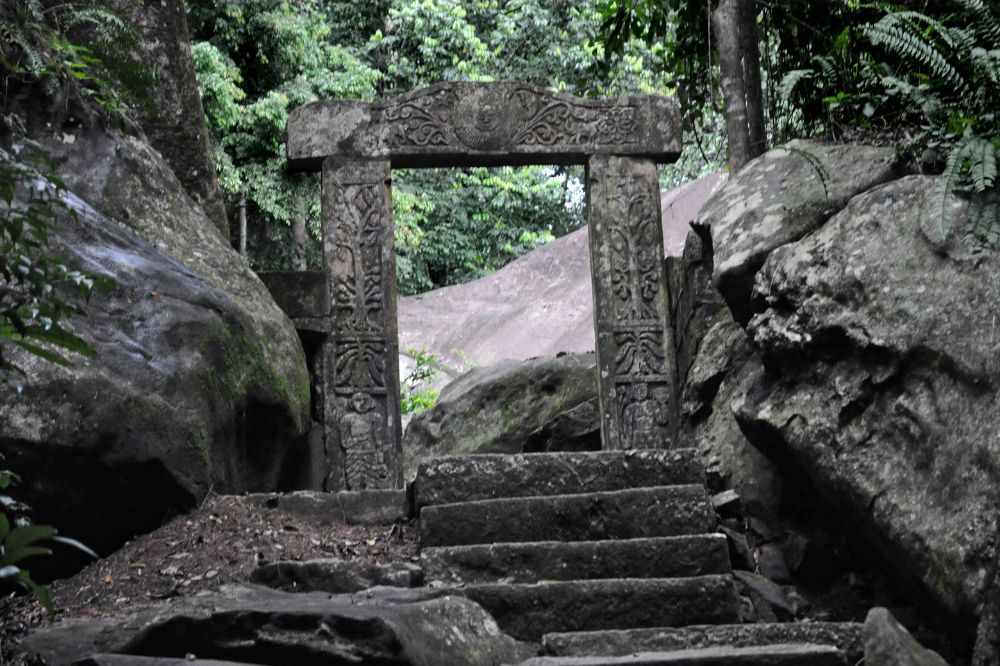
Ratnapura Pothgul Raja Maha Viharaya

About Ratnapura Pothgul Raja Maha Viharaya
An ancient hilltop cave temple in Karangoda reached via 454 stone steps, famed for a 40-foot reclining Buddha and King Valagamba lore.
Perched dramatically upon a forested rocky hill in Karangoda village, approximately six kilometers southwest of Ratnapura town, Ratnapura Pothgul Raja Maha Viharaya is one of the most venerable and atmospheric ancient cave temples in the Sabaragamuwa Province. Believed to have been originally established in the 1st century BCE by King Vattagamani Abhaya (King Valagamba), the sanctuary served as a fortified wilderness refuge for the monarch during his exile amid South Indian Chola invasions. Centurions later, during the 18th-century Kandyan era, the monastery experienced a grand spiritual revival under King Kirti Sri Rajasinha, who renovated the rock chambers and commissioned exquisite new image houses. The name 'Pothgul' (meaning 'library' or 'book repository') reflects an enduring tradition that the hermitage served as a scholarly center where sacred Theravada Buddhist scriptures were transcribed, preserved, and distributed.
The monastery is laid out across lower and upper terraces (malakas) connected by a celebrated stairway of 454 stone steps cut into the hill. On the lower level stand the monks' residence (Avasa Ge), chapter house (Seema Malakaya), and preaching hall, while ascending past the shaded steps leads to the ancient archaeological precinct nestled beneath a towering natural rock face. The primary cave temple (Len Viharaya), fitted with pre-Christian drip ledges (katarama) to divert rainwater, measures over 26 meters in length and shelters a colossal 40-foot (27-cubit) reclining Buddha statue molded from lime plaster. Flanking the head of the serene Buddha are statues of guardian deities Saman and Vishnu, alongside vivid Kandyan-style frescoes depicting Jataka tales, celestial beings, and floral patterns decorating the cavern ceiling.
Exploring Pothgul Viharaya offers a peaceful pilgrimage blending natural hill-country solitude with fascinating antiquity. In addition to the main cave, the upper courtyard features a historic Tampita Viharaya (shrine elevated on stone pillars), ancient ascetic meditation cells, secret underground escape tunnels, and the sacred 'Darupokuna'—a natural rock pond near the Bodhi tree long revered for its healing mineral waters. From the edge of the upper rock terrace, travelers are rewarded with sweeping, unobstructed vistas over the emerald valleys, rubber plantations, and mist-veiled mountain ranges of Ratnapura, making it a profound cultural and historical waypoint.
What to expect
Highlights
- Ascend the historic 454 stone steps winding up through shaded forest groves to reach the sacred upper cave terrace.
- Marvel at the monumental 40-foot (27-cubit) reclining Buddha statue resting serenely within the main rock shelter.
- Explore two ancient Len Viharas (cave temples) featuring pre-Christian drip ledges and vibrant Kandyan-era ceiling frescoes.
- Inspect the historic Tampita Viharaya, an image house traditionally constructed on elevated granite pillars.
- Discover the sacred Darupokuna, a natural rock-cut pond near the Bodhi tree revered for its therapeutic properties.
- Take in sweeping panoramic vistas of the surrounding Sabaragamuwa mountains and lush rubber valleys from the upper terrace.
Traveler reviews
Ratings and experiences from visitors
No traveler reviews written yet for Ratnapura Pothgul Raja Maha Viharaya.
Traveler photos
Photos of this destination
Questions & answers
What is the dress code or entrance etiquette?
Visitors must dress modestly with shoulders, chest, and knees covered. White or light-colored attire is customary. All footwear and hats must be removed before stepping onto the sacred upper rock terrace and entering the cave shrines.
What is the entry ticket fee for foreigners and locals?
Admission to Ratnapura Pothgul Raja Maha Viharaya is completely free of charge for both international travelers and Sri Lankan citizens, though voluntary donations placed in temple donation tills to support monastic upkeep are warmly appreciated.
How physically demanding is the climb up the 454 steps?
The climb is rated easy to moderate. Ascending the 454 stone steps takes roughly 15 to 25 minutes at a steady pace, with shaded landings along the way offering comfortable resting spots.
How long does a typical visit take?
A typical visit lasts between 1 to 2 hours, which provides ample time to climb the stairway, explore the cave shrines and Tampita Viharaya, inspect the frescoes, and enjoy the scenic valley views.
Are cameras and photography permitted?
Yes, photography and videography are warmly welcomed across the outdoor staircases, temple courtyards, and mountain viewpoints. However, avoid taking selfies with your back turned directly to Buddha statues, and strictly refrain from using flash inside the cave image houses.