Sankhapala Raja Maha Viharaya
About Sankhapala Raja Maha Viharaya
An ancient rock cave temple in Pallebedda founded by King Dutugemunu's warrior Phussadeva, featuring historic murals and panoramic summit views.
Perched dramatically against the rocky ridges of Pallebedda along the Pelmadulla–Embilipitiya highway in the Ratnapura District, Sankhapala Raja Maha Viharaya is one of the most venerable and historically evocative ancient cave temples in southern Sri Lanka. Dating back to the 2nd century BCE, the temple's legendary origins are deeply entwined with King Dutugemunu's heroic campaigns. According to ancient chronicles, the sanctuary was gifted to Phussadeva, one of the King's ten legendary giant warriors (Dasa Maha Yodhayo), whose thunderous blowing of the royal conch shell (Sankhaya) sounded victory in battle. After the unification of the island, Phussadeva renounced worldly glory, enshrined his sacred conch atop the rocky crest, and entered the Buddhist monastic order as an Arahat monk, meditating within the sheltered cavern dwellings of the rock.
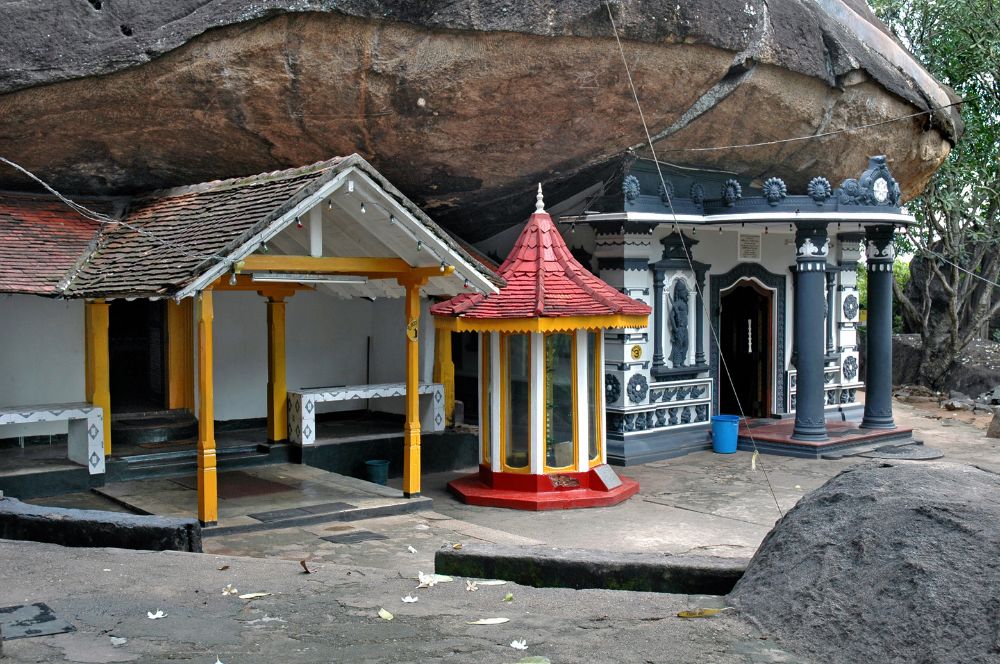
Archaeologically, the monastery spans multiple tiers of natural granite boulders and caves fitted with pre-Christian Early Brahmi drip-ledge (katarama) inscriptions, attesting to its use as a forest hermitage over two millennia ago. During the 18th-century Kandyan era, the shrine underwent extensive royal patronage and restoration, giving rise to vibrant image houses (pilimage) enclosed inside the cool recesses of the cliffs. Inside, visitors can admire majestic reclining and seated Buddha sculptures, alongside detailed Kandyan-style frescoes depicting Jataka tales, celestial beings, floral arabesques, and historical processions painted with natural organic pigments.
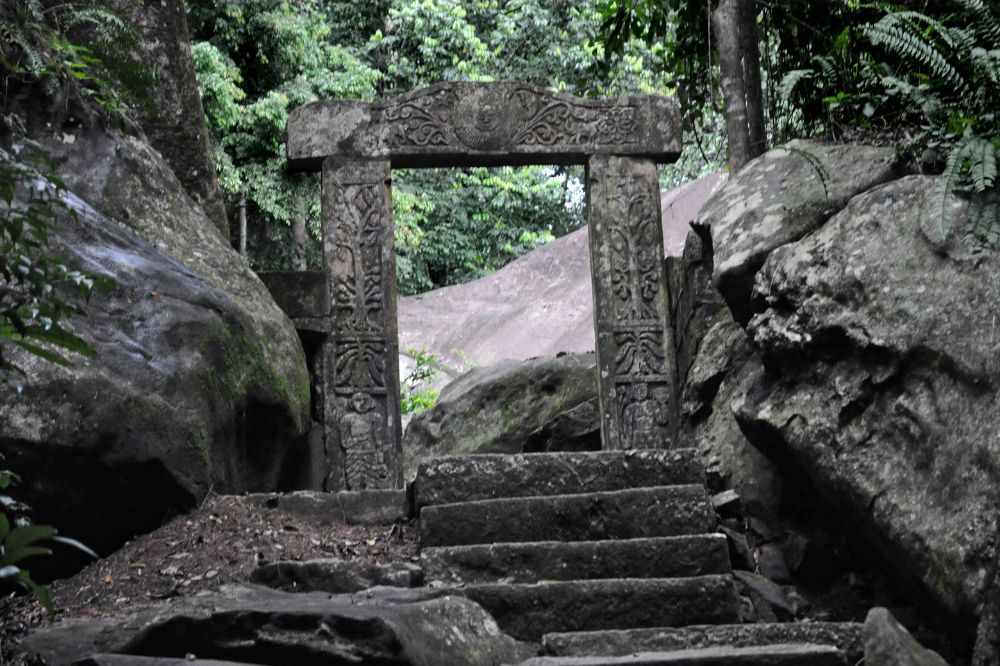
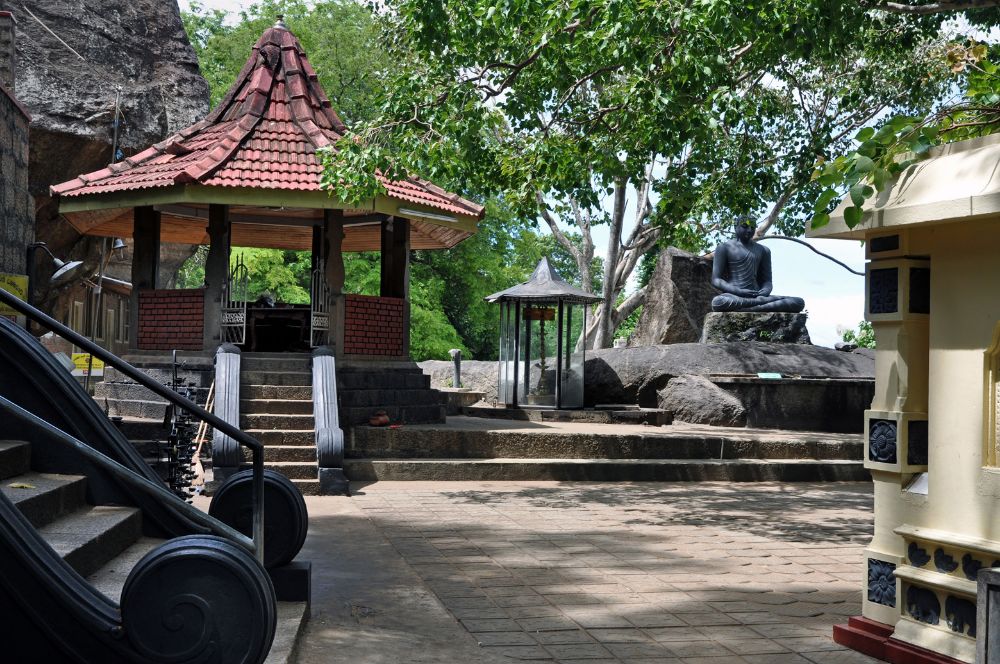
Ascending the stone stairways carved into the mountainside leads pilgrims past ancient Bo trees, rock-cut cisterns, and monastic cells to the summit stupa resting on the elevated rocky outcrop. From this breezy vantage point, travelers are treated to breathtaking 360-degree panoramas extending across the verdant scrub forests, distant mountain ranges of Sabaragamuwa, and the southern plains stretching toward Udawalawe. Offering a tranquil blend of monastic serenity, ancient warrior folklore, and architectural grandeur, Sankhapala remains an unmissable heritage waypoint on the journey through southern Sri Lanka.
What to expect
Highlights
- Explore ancient natural rock caves featuring pre-Christian Early Brahmi drip-ledge inscriptions dating back to the 2nd century BCE.
- Admire vibrant Kandyan-era cave paintings, Jataka murals, and monumental reclining Buddha statues preserved within cool rock sanctuaries.
- Discover the legendary history of Phussadeva, King Dutugemunu's famed warrior who sounded the royal conch shell and later attained Arahatship here.
- Climb the scenic rock-cut stone staircases leading past tranquil monastic kutis and historic Bodhi tree enclosures.
- Take in sweeping panoramic vistas of the surrounding Sabaragamuwa valleys and distant mountain silhouettes from the summit dagoba.
- Inspect ancient stone artifacts, sacred rock-cut water cisterns, and royal inscriptions scattered across the multi-tiered complex.
Traveler reviews
Ratings and experiences from visitors
No traveler reviews written yet for Sankhapala Raja Maha Viharaya.
Traveler photos
Photos of this destination
Questions & answers
What is the dress code or entrance etiquette?
Visitors must dress modestly with shoulders, chest, and knees fully covered. White or light-colored clothing is customary. All footwear and hats must be removed before entering sacred courtyards and cave shrine rooms.
What is the entry ticket fee for foreigners and locals?
Admission to Sankhapala Raja Maha Viharaya is completely free for both international tourists and local pilgrims, though modest voluntary donations placed in temple donation tills to support monastic upkeep are warmly appreciated.
How long does a typical visit take?
A typical visit lasts between 1 to 2 hours, allowing sufficient time to tour the lower cave shrines, climb the stone steps, inspect the historic murals, and enjoy the summit panoramas.
Are cameras and photography permitted?
Yes, photography is warmly welcomed across the outdoor staircases, rock platforms, and summit viewpoints. However, avoid taking selfies with your back turned directly to Buddha statues, and strictly refrain from using flash photography inside the mural-adorned cave image houses.
How physically demanding is the climb to the top?
The ascent involves climbing around 150 to 200 stone steps along uneven natural rock slopes. It requires a moderate level of physical fitness, but shaded rest spots and tree-lined landings make it comfortable for most visitors.