Munneswaram Temple
 Religious Places


About Munneswaram Temple
One of Sri Lanka's five ancient Pancha Ishwarams of Lord Shiva, steeped in Ramayana legend and vibrant multi-faith devotion.
Situated just east of the coastal town of Chilaw in Sri Lanka's North Western Province, Sri Munneswaram Devasthanam is one of the island's oldest and most revered Hindu temple complexes. Celebrated as one of the five ancient 'Pancha Ishwarams' dedicated to Lord Shiva along Sri Lanka's perimeter, the temple's recorded history dates back at least to 1000 CE, though sacred tradition places its origins millennia earlier. According to the Hindu epic Ramayana, after defeating King Ravana, Lord Rama felt afflicted by 'Brahmahasti Dosha' (the karmic sin of slaying a Brahmin scholar). Flying northward in his vimana, Rama sensed the spiritual aura of this sacred ground and stopped here to pray to Lord Shiva, who advised him to install four lingams—including one at nearby Manavari—to attain absolution.
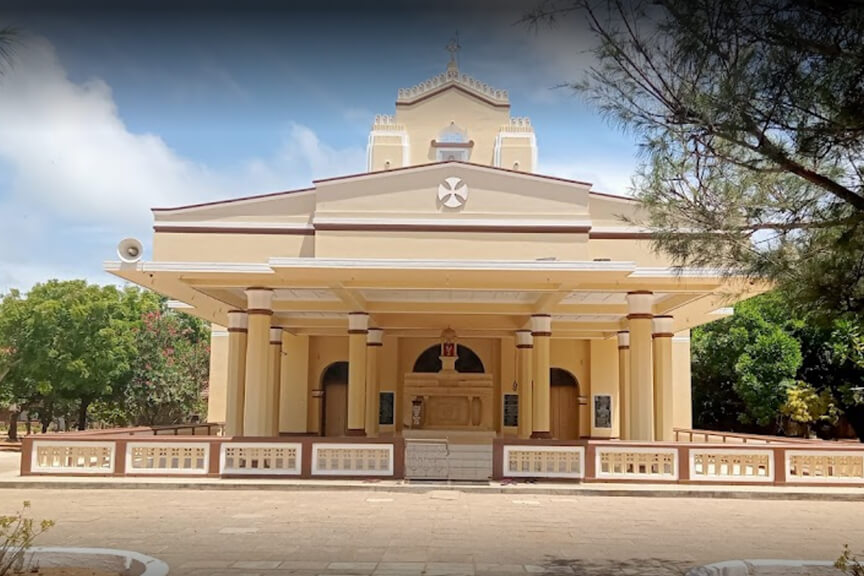
Architecturally, the main Shiva kovil showcases classical South Indian Dravidian craftsmanship, crowned by ornate multi-tiered Rajagopurams (gateway towers) alive with brightly painted stucco figures of Hindu deities and celestial guardians. Despite being demolished twice by Portuguese colonial forces in the 16th and 17th centuries, the temple was steadfastly rebuilt in the mid-18th century under the patronage of the Kandyan King Kirti Sri Rajasinghe. Uniquely, Munneswaram is not a single sanctuary but a syncretic complex of five distinct temples: the central Shiva Kovil, a Ganesha shrine, an Ayyanayake (guardian deity) shrine, a Buddhist temple, and the fiercely popular Bhadrakali Amman Kovil.
Today, Munneswaram stands as a living testament to Sri Lanka's shared spiritual heritage, drawing Hindu, Sinhala Buddhist, and even Roman Catholic devotees daily. During the grand 28-day annual Munneswaram Festival in August and September, thousands of pilgrims gather to witness vibrant fire-walking ceremonies (Theemithi) and pull towering wooden temple chariots through the streets amidst the hypnotic pulse of Nadaswaram horns and Thavil drums.
What to expect
Highlights
- The historic central Sri Munneswarar Shiva Kovil and its sacred Goddess Vadivambigai Amman sanctum.
- Towering, intricately sculpted Dravidian Rajagopurams (entrance towers) at the East, North, and West gates.
- The multi-faith complex of five shrines, including the bustling Bhadrakali Amman Temple, Ganesha shrine, Ayyanayake shrine, and Buddhist temple.
- Deep Ramayana Trail heritage linked to Lord Rama's penance and nearby Manavari Kovil (just 6 km away).
- The vibrant 28-day annual Munneswaram Festival (August–September) featuring grand chariot processions and fire-walking rituals.
- Centuries-old stone inscriptions and sanctuary halls reconstructed under Kandyan royal patronage in 1753.
Traveler reviews
Ratings and experiences from visitors
No traveler reviews written yet for Munneswaram Temple.
Traveler photos
Photos of this destination
Questions & answers
What is the dress code or entrance etiquette?
All visitors must dress modestly with both shoulders and knees covered (long trousers, sarongs, or maxi skirts; no shorts or sleeveless tops). Footwear and hats must be left at the outer shoe rack before entering the temple compound.
What is the entry ticket fee for foreigners and locals?
Entry to Munneswaram Temple is completely free for both foreign tourists and local devotees. Visitors who wish to offer a fruit-and-flower pooja basket (archana) or make a voluntary donation can purchase offering tokens for around LKR 100 to 500.
How long does a typical visit take?
A typical visit takes 45 minutes to 1 hour to explore the main Shiva sanctuary and the adjacent Kali and Ayyanayake shrines, or about 2 hours if you pair it with a short drive to nearby Manavari Temple.
Are cameras and photography permitted?
Photographing the colourful exterior gopurams, outer courtyards, and festival processions is freely allowed. However, photography and videography inside the innermost sanctum (Moolasthanam) where the sacred Shiva Lingam resides are strictly prohibited.
What are the daily opening and Pooja timings?
The main temple complex is open daily from 5:30 AM to 8:00 PM, with major daily poojas held at 5:30 AM, 7:30 AM, 12:00 PM, 5:00 PM, 7:00 PM, and 8:00 PM.