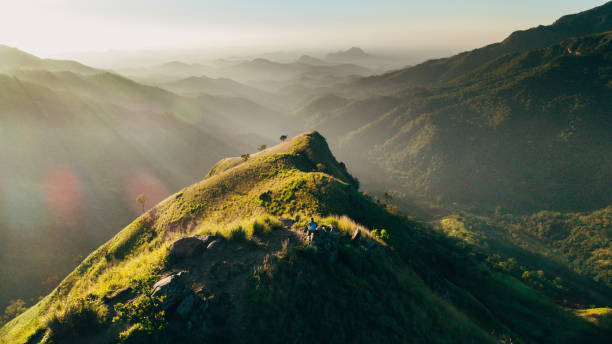
Thangamale Bird Sanctuary
 Wildlife


About Thangamale Bird Sanctuary
A protected highland montane forest sanctuary near Haputale, renowned for rare endemic birdlife and scenic cloud-forest trekking trails.
Enveloping the rugged highland ridges southwest of Haputale, the Thangamale Bird Sanctuary (also referred to as the Tangamalai Nature Reserve) spans roughly 131 hectares of montane cloud forests, towering Scandinavian pine plantations, and natural shola vegetation. Translating poetically from Tamil as the 'Golden Mountain', Thangamale is one of the most critical high-elevation biodiversity habitats in Sri Lanka's Uva Province. The sanctuary serves as a natural ecological buffer between the high-altitude tea plantations of Dambatenne and the steep southern escarpment dropping towards the lower plains of Wellawaya.
Renowned as a haven for avid ornithologists and nature photographers, Thangamale is home to an extraordinary concentration of avian species, including a wealth of Sri Lankan endemics. The cool mountain air resounds with the melodious calls of the Sri Lanka whistling thrush, yellow-eared bulbul, dusky blue flycatcher, Sri Lanka white-eye, and the elusive Sri Lanka wood pigeon. Mixed bird feeding flocks frequently sweep through the moss-draped canopy, alongside raptors such as the black eagle and mountain hawk-eagle circling overhead on thermal currents.
The reserve features a classic hill-country walking trail that winds past the historic stone perimeter of Adisham Monastery before tracing the contours of the mountain toward Idalgashinna. Walking along this secluded, pine-needle-strewn path, travelers encounter cascading forest streams, wild orchids clinging to lichen-crusted bark, and occasional sightings of sambar deer, barking deer, and purple-faced langurs. With cool breezes rustling through dense canopy and sweeping vistas opening up toward the mist-veiled southern valleys, Thangamale offers an authentic and tranquil montane wilderness trek.
What to expect
Highlights
- A protected 131-hectare highland cloud-forest and pine sanctuary safeguarding rich montane biodiversity
- Prime birdwatching terrain harboring endemics including the yellow-eared bulbul, dusky blue flycatcher, and Ceylon whistling thrush
- The scenic Tangamalai forest trekking trail linking Adisham Monastery to the Idalgashinna mountain pass
- Vibrant montane mammal and reptile habitats sheltering wild sambar deer, barking deer, and purple-faced langurs
- Picturesque forest canopies adorned with wild orchids, giant tree ferns, and moss-draped highland flora
- Sweeping cliffside panoramas overlooking the terraced valleys and deep southern escarpment of Ceylon
Traveler reviews
Ratings and experiences from visitors
No traveler reviews written yet for Thangamale Bird Sanctuary.
Traveler photos
Photos of this destination
Questions & answers
What is the recommended dress code and gear for trekking in Thangamale?
Because Thangamale is a wild nature reserve rather than a religious site, casual outdoor trekking attire in muted, earthy tones (greens, browns, or greys) is recommended to avoid startling wildlife. Sturdy trail shoes or hiking boots, leech socks during wet periods, and a light fleece or rain shell are essential gear.
What is the entry ticket fee for foreigners and locals?
Access to the Thangamale Bird Sanctuary and its public forest footpaths is completely free of charge for both foreign visitors and Sri Lankan citizens, as there are no formal entrance ticketing booths.
How long does a typical birdwatching trek take and what is the difficulty?
A standard birdwatching walk takes between 2.5 and 4 hours, depending on your pace and ornithological interest. The main trail running between Adisham Bungalow and Idalgashinna is moderately easy to moderate, with gentle slopes and well-trodden footpaths.
Are cameras and drone photography permitted?
Handheld wildlife and landscape photography is freely permitted and highly encouraged. However, operating recreational drones is strongly discouraged, as the noise disrupts nesting birds and other sensitive wildlife within the protected reserve.
How do travelers access the sanctuary trailhead?
The primary trailhead begins directly behind the Adisham Monastery gates, located approximately 4 kilometers west of Haputale town. Travelers can hire a local tuk-tuk from Haputale Railway Station or walk along the quiet paved lane through the pine woods to reach the start of the trail.