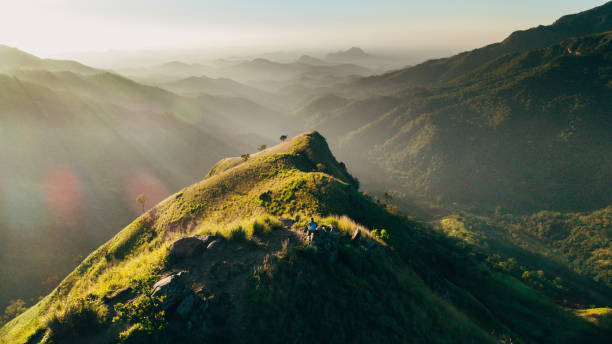
Lipton's Seat
 Mountains


About Lipton's Seat
A legendary mountain viewpoint at 1,970 meters, where tea baron Sir Thomas Lipton once surveyed his emerald Ceylon tea empire.
Perched on the crest of the Poonagala ridge at an elevation of 1,970 meters (6,463 feet) above sea level, Lipton's Seat is one of Sri Lanka's most iconic and storied highland viewpoints. In the late 19th century, Scottish tea magnate Sir Thomas Lipton used this windswept cliff edge as his private observation post, often riding up on horseback from his home at Dambatenne to inspect the sprawling tea estate below. Sitting atop a wrought-iron bench with a fresh cup of tea, Lipton would survey the endless terraces of camellia bushes that laid the groundwork for his global Ceylon tea revolution, transforming high-grown tea from an elite luxury into an everyday worldwide staple.
The viewpoint commands an awe-inspiring geographical amphitheater. On crystal-clear mornings before cloud cover rolls in, Lipton's Seat offers an extraordinary 360-degree vista reputed to span across five separate Sri Lankan provinces: Uva, Southern, Sabaragamuwa, Central, and Eastern. Looking south from the precipice, the rugged highlands fall away into dramatic gorges, revealing shimmering distant landmarks including the Uda Walawe and Chandrika reservoirs, the Hambantota harbor coastline, and the rugged peaks of the Namunukula and Haputale mountain ranges.
Visiting Lipton's Seat is as much about the scenic journey as it is about the summit vista. The 7-kilometer trail from the historic Dambatenne Tea Factory winds through some of the country's oldest, most immaculately groomed tea gardens, passing colorfully clad tea pluckers working against rolling morning mists. At the summit, a lifelike bronze statue of Sir Thomas Lipton seated on a garden bench invites travelers to sit beside the pioneer, while an adjacent rustic tea cafe serves piping-hot cups of single-estate Dambatenne orthodox black tea alongside local snacks, making it the quintessential high-altitude Ceylon plantation experience.
What to expect
Highlights
- Commanding panoramic summit vista spanning across five Sri Lankan provinces and southern coastal lowlands
- The iconic bronze statue and bench of Sir Thomas Lipton commemorating the birthplace of the global Lipton tea brand
- The scenic 7-kilometer trail traversing the manicured emerald terraces of the historic Dambatenne Tea Estate
- Close proximity to Dambatenne Tea Factory, built by Sir Thomas Lipton in 1890 and still processing premium orthodox black tea
- A cozy summit cliffside tea stall serving freshly brewed single-estate Ceylon tea and traditional snacks
- Early morning golden sunrise views over mist-filled highland valleys, distant reservoirs, and mountain passes
Traveler reviews
Ratings and experiences from visitors
No traveler reviews written yet for Lipton's Seat.
Traveler photos
Photos of this destination
Questions & answers
What is the recommended dress code and attire for Lipton's Seat?
Because Lipton's Seat is an outdoor mountain viewpoint rather than a religious site, comfortable casual trekking attire is suitable. However, warm layers such as a light jacket, windbreaker, or fleece are essential for chilly pre-dawn temperatures, along with sturdy walking shoes for uneven pavement and estate paths.
What is the entry ticket fee for foreign and local visitors?
The entrance ticket fee is LKR 500 per foreign adult and LKR 100 for local visitors, payable at the estate checkpoint barrier along the access road. Vehicles entering the upper viewpoint road incur a small parking fee of approximately LKR 100 to 250.
How long does a typical visit take and how do travelers get there?
A typical visit takes 2 to 3.5 hours. Travelers usually hire a tuk-tuk from Haputale town (about a 45-minute drive each way) to the summit. Many visitors choose to take a vehicle up for sunrise and spend 1.5 to 2 hours leisurely walking the 7-kilometer scenic downhill route back to Dambatenne Tea Factory.
Are cameras and drone photography permitted at Lipton's Seat?
Handheld photography and videography are freely permitted and exceptionally popular across the viewpoint and tea plantations. Operating recreational drones is generally allowed, but pilots should exercise caution with strong mountain winds and avoid flying near tea estate residential settlements.
Why is visiting early in the morning so critical?
Early morning arrival (between 5:30 AM and 7:30 AM) is essential because thermal heat from the lowlands causes thick condensation and heavy white fog to roll over the southern escarpment by mid-morning, which often completely blocks the view after 9:00 AM.