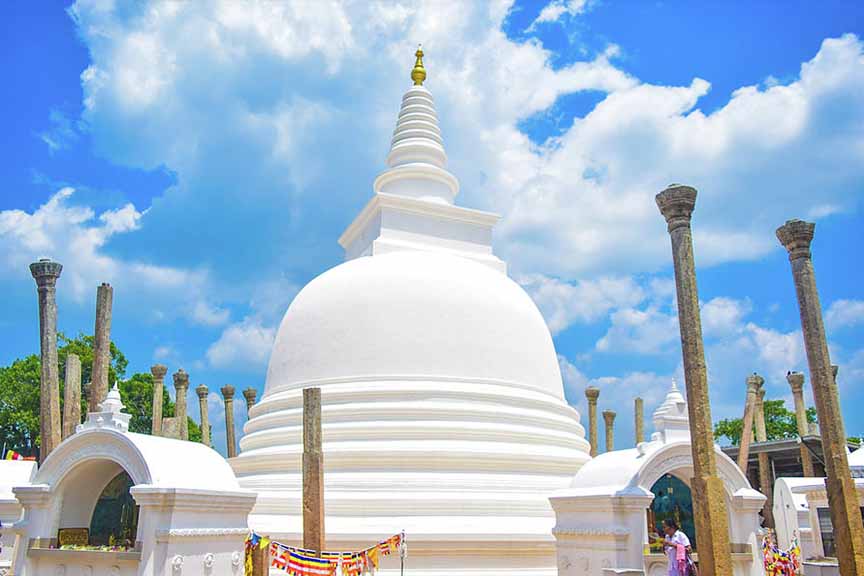
Polonnaruwa Vatadage

About Polonnaruwa Vatadage
Admire Polonnaruwa's finest circular relic house, carved with moonstones, guardstones and serene seated Buddha images.
Polonnaruwa Vatadage is a richly carved circular relic house in the Sacred Quadrangle of Sri Lanka's medieval capital. Built during the twelfth century, probably under King Parakramabahu I or King Nissanka Malla, it was designed to protect a sacred relic, possibly the Tooth Relic. The monument is widely regarded as one of the finest surviving examples of Sri Lankan circular shrine architecture.
Four entrances lead through concentric stone terraces toward a small stupa and seated Buddha images. The moonstones, guardstones, carved pillars and decorative stonework reward close observation, while the surrounding Dalada Maluwa places the Vatadage beside other important structures such as Hatadage and Atadage.
Visitors walk through an active archaeological landscape rather than a single isolated building. Wear comfortable footwear for the wider site, remove shoes when required at sacred platforms, and allow time for the heat, uneven ground and nearby monuments. Early morning or late afternoon makes the carved details easier to appreciate.
What to expect
Highlights
- Four carved entrances into the circular relic house
- Intricate moonstones and guardian stones
- Seated Buddha images facing the central stupa
- Concentric stone terraces and carved pillars
- The Sacred Quadrangle and surrounding Dalada Maluwa
- Nearby Hatadage, Atadage and Nissankalata Mandapa
Traveler reviews
Ratings and experiences from visitors
No traveler reviews written yet for Polonnaruwa Vatadage.
Traveler photos
Photos of this destination
Questions & answers
What should I wear and how should I behave at the Vatadage?
Cover your shoulders and knees, remove shoes and hats where requested, avoid touching the carvings and never climb on the monument or pose disrespectfully near Buddha images.
What are the entry fees for foreign and local visitors?
Foreign adults are commonly charged about USD 30 for the Polonnaruwa Ancient City ticket. Sri Lankan visitors pay the current local CCF or Department of Archaeology rate. The ticket covers the wider archaeological zone.
How long should I spend at Polonnaruwa Vatadage?
Allow around 30 to 45 minutes for the Vatadage itself and at least three hours if you plan to explore the wider Sacred Quadrangle and ancient city by bicycle or vehicle.
Is photography allowed at the Vatadage?
Photography is generally permitted, but do not touch the sculptures, use disruptive equipment or pose with your back toward Buddha images. Follow staff instructions at sacred areas.