St. Clair's Falls
 Waterfalls

About St. Clair's Falls
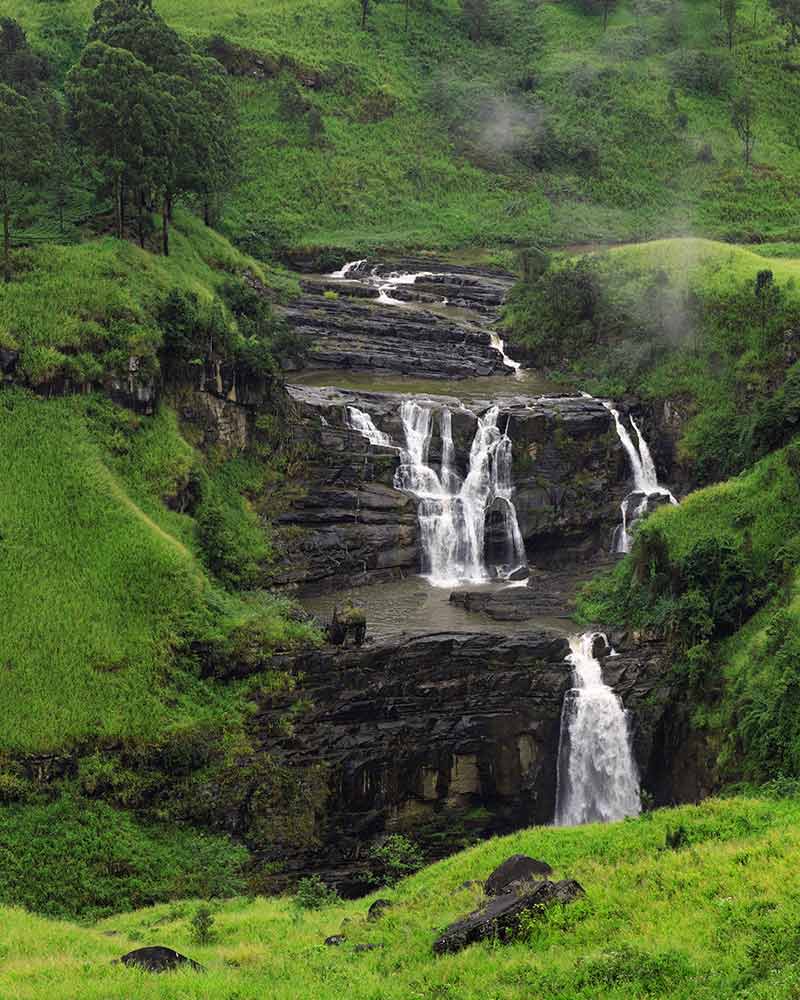
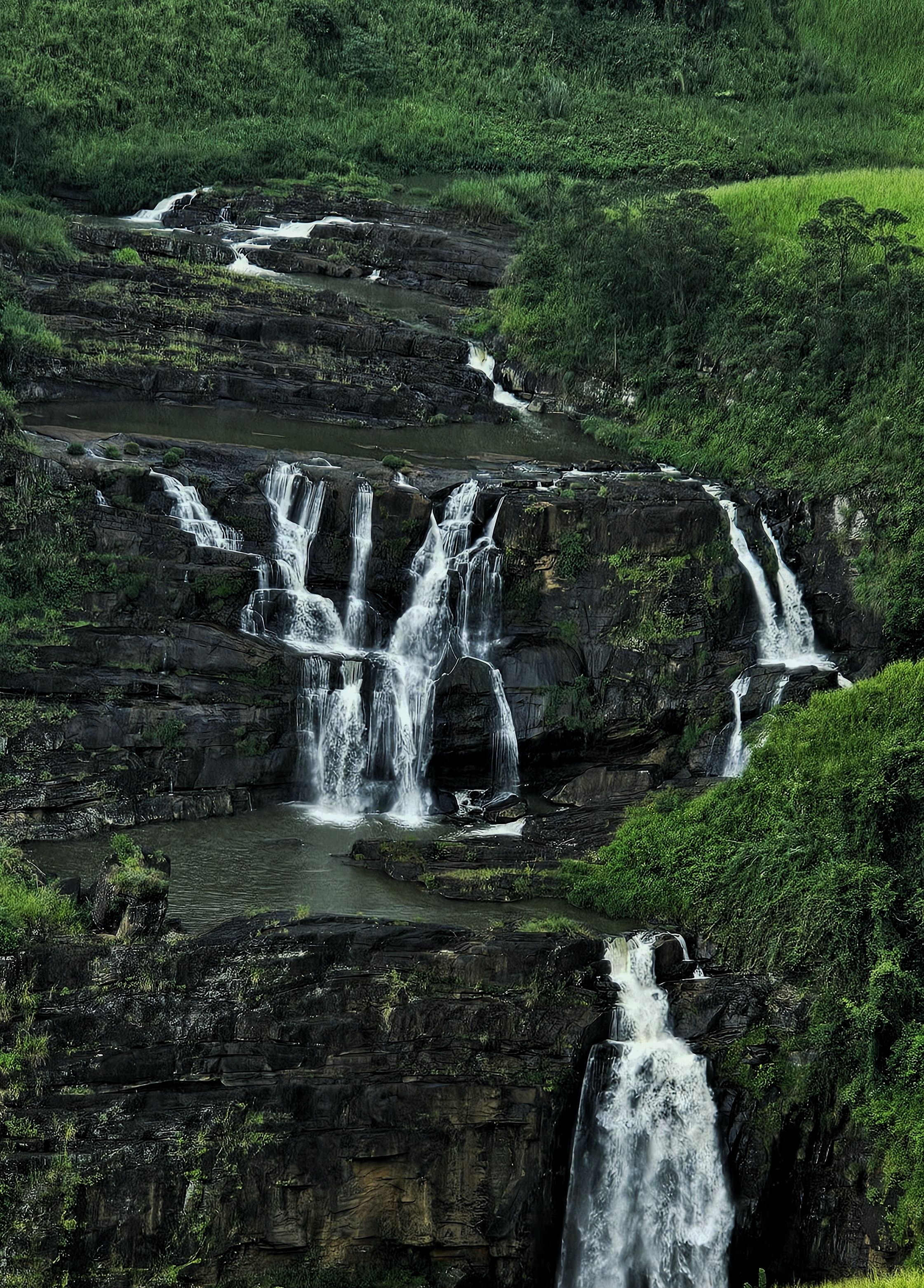
Known as the 'Little Niagara of Sri Lanka', this grand 80-meter-wide cascade plunges dramatically through lush tea plantation slopes.
Cascading through an expansive amphitheater of emerald-green tea terraces at an elevation of 1,198 meters above sea level, St. Clair's Falls is one of Sri Lanka's widest and most celebrated natural landmarks. Affectionately dubbed the 'Little Niagara of Sri Lanka', this majestic cascade spans roughly 50 meters in breadth and plunges 80 meters (260 feet) over three stepped granite rock ledges. Fed by the swift waters of the Kotmale Oya—a key highland tributary of the sacred Mahaweli River—the waterfall takes its name from the historic St. Clair Tea Estate through which its roaring currents flow.
The waterfall is uniquely divided into two distinct sections: 'Maha Ella' (The Greater Fall), which drops 80 meters over a massive rock ridge into a swirling plunge basin, and 'Kuda Ella' (The Lesser Fall), a secondary 50-meter cascade located just downstream that continues carving through the rugged ravine. Flanked by rolling hills of impeccably manicured Ceylon tea bushes and towering eucalyptus windbreaks along the A7 Colombo–Hatton–Nuwara Eliya highway, the cascade forms an iconic highland panorama alongside its sister spectacle, Devon Falls, located just a few kilometers to the west.
Visiting St. Clair's Falls delivers a tranquil and quintessential hill country road-trip stop. Travelers can observe the roaring waters from dedicated roadside viewing terraces or enjoy the panorama from the verandas of adjacent estate tea lounges, savoring a warm cup of single-origin orthodox black tea while mist gently curls off the river valley. The blend of roaring mountain water, crisp highland breezes, and sweeping emerald contours makes St. Clair's an essential sensory highlight on any journey into the central tea country.
What to expect
Highlights
- The grand 80-meter-tall and 50-meter-wide cascade renowned across South Asia as the 'Little Niagara of Sri Lanka'
- The twin tiered structure comprising 'Maha Ella' (The Greater Fall) and 'Kuda Ella' (The Lesser Fall)
- Panoramic roadside observation platforms along the scenic A7 highway offering direct valley vistas
- Scenic heritage tea estate verandas where travelers can sip single-origin Ceylon tea overlooking the falls
- Close proximity to Devon Falls, creating an iconic twin-waterfall exploration route in the Dimbula tea region
- Sweeping backdrops of manicured tea gardens, eucalyptus trees, and the dramatic Kotmale river gorge
Traveler reviews
Ratings and experiences from visitors
No traveler reviews written yet for St. Clair's Falls.
Traveler photos
Photos of this destination
Questions & answers
What is the recommended footwear and attire for visiting St. Clair's Falls?
Because the waterfall is primarily viewed from paved roadside platforms and tea centers, casual travel attire is suitable. A light fleece jacket or windbreaker is helpful for the cool mountain air, along with comfortable walking shoes.
What is the entry ticket fee to view St. Clair's Falls?
Access to the public viewpoints and roadside observation terraces overlooking St. Clair's Falls is completely free of charge for both foreign travelers and locals.
How long does a typical visit or viewpoint stop take?
A typical stop takes between 25 and 45 minutes, allowing ample time to photograph the falls from different angles, soak in the mountain breeze, and enjoy a quick cup of fresh Ceylon tea at the tea center.
Are cameras and drone photography permitted?
Personal handheld photography is freely permitted and very popular along the highway lookouts. However, flying recreational drones over the highway or tea estates requires prior authorization from the Civil Aviation Authority of Sri Lanka.
Can visitors hike down to swim at the base of the waterfall?
No, hiking down to the base is neither permitted nor safe. The surrounding land belongs to working tea estates, the descent is precipitous with dense undergrowth, and the plunge pool has hazardous submerged rocks and strong river currents.


