Dambakola Patuna
 Religious Places
About Dambakola Patuna
An ancient sacred port in northern Sri Lanka where Theri Sanghamitta arrived in 249 BCE carrying the sacred Jaya Sri Maha Bodhi sapling.
Situated on the peaceful northwestern coast of the Jaffna Peninsula in the coastal village of Mathagal, Dambakola Patuna (historically celebrated in Pali chronicles as Jambukola Pattana) is one of Sri Lanka's most historically and spiritually transformative milestones. In the 3rd century BCE, following the introduction of Buddhism by Arahat Mahinda, Emperor Ashoka of India sent his daughter, Sanghamitta Theri, across the Palk Strait to this historic northern harbour. She brought with her the southern branch of the sacred Jaya Sri Maha Bodhi tree and established the Bhikkhuni monastic order in Sri Lanka. King Devanampiya Tissa personally traveled to the port, wading neck-deep into the ocean to reverently receive the sapling, subsequently constructing the original Jambukola Vihara to commemorate this momentous event.
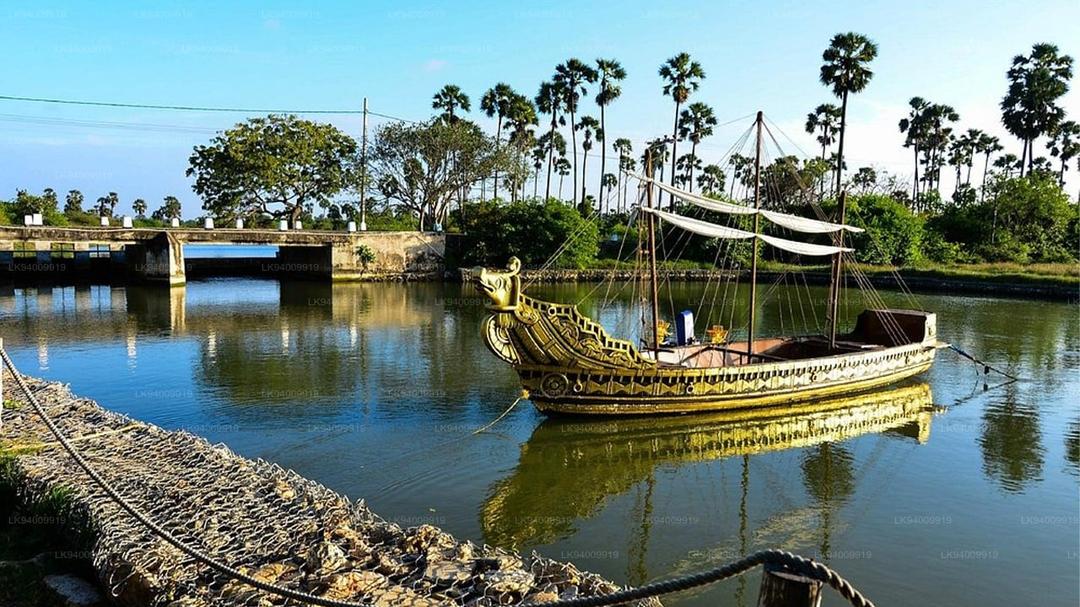
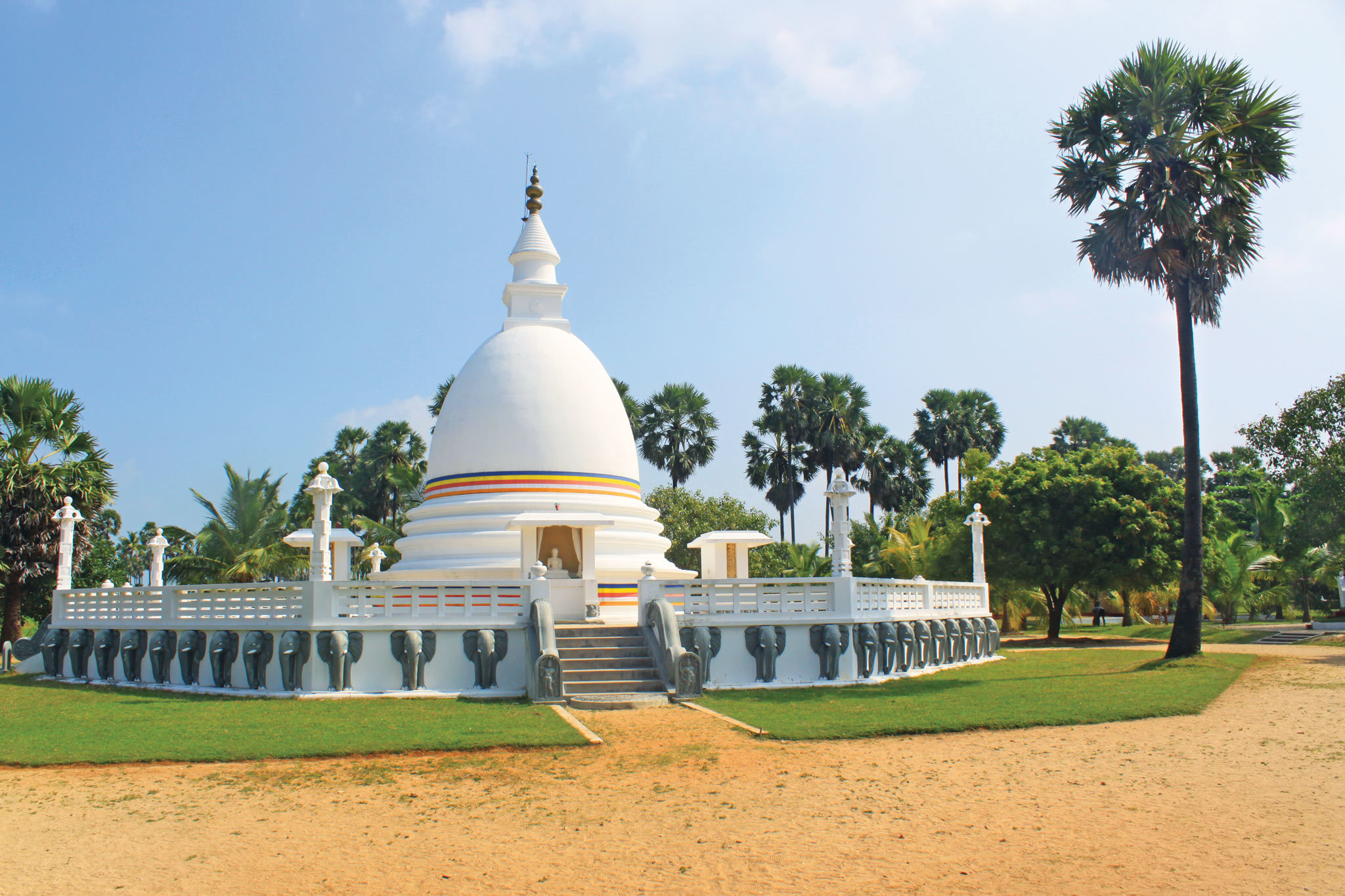
While centuries of shifting maritime trade and regional conflicts obscured the ancient structures, the sacred enclave was revived in contemporary history through comprehensive restorations spearheaded by the Sri Lanka Navy. Today, the modern complex—known as Sri Sanghamitta Viharaya—features a gleaming white oceanfront stupa, an evocative bronze monument depicting Sanghamitta Theri cradling the sacred golden bowl with the Bodhi branch, a flourishing Bo tree planted in 1998, and an outdoor shrine showcasing a replica of the ancient sailing vessel that crossed from India.
Visitors to Dambakola Patuna are greeted by an atmosphere of serene seaside tranquility, where the rhythmic whisper of gentle waves and refreshing ocean breezes harmonize with the fluttering of Buddhist prayer flags. Looking out across the flat azure waters of the northern shoreline, pilgrims and travelers can reflect on the profound maritime connection between India and Sri Lanka that shaped over two millennia of island civilization, culture, and faith.
What to expect
Highlights
- Stand at the hallowed oceanfront landing site where Sanghamitta Theri arrived from India in 249 BCE with the sacred Bodhi sapling.
- Pay homage at the gleaming white seaside stupa built directly beside the tranquil waters of the Palk Strait.
- Admire the commemorative gilded statue of Sanghamitta Theri and the replica sculpture of the ancient sailing vessel.
- Worship at the sacred Bodhi tree encircled by ornate golden railings and fluttering Buddhist prayer flags.
- Enjoy sweeping, uncrowded ocean panoramas across the calm northern coastal waters of the Jaffna Peninsula.
Traveler reviews
Ratings and experiences from visitors
No traveler reviews written yet for Dambakola Patuna.
Traveler photos
Photos of this destination
Questions & answers
What is the dress code or entrance etiquette?
Modest attire covering shoulders, chest, and knees is strictly required, with white or light-colored clothing strongly encouraged. Footwear and hats must be removed before entering the sandy temple precinct and stone stupa terrace.
What is the entry ticket fee for foreigners and locals?
Admission to Dambakola Patuna is completely free for both international tourists and local pilgrims, though voluntary donations placed in temple tills are appreciated.
How long does a typical visit take?
A typical visit lasts between 45 minutes to 1.5 hours, providing ample time to walk through the shrine grounds, admire the monuments, and enjoy the coastal views.
Are cameras and photography permitted?
Yes, photography is warmly welcomed around the outdoor stupa, coastal monuments, and viewpoints. However, always show proper reverence and never turn your back directly to Buddha statues for photos.
How do you travel to Dambakola Patuna from Jaffna city?
The site is located approximately 20 kilometers north of Jaffna city in Mathagal. It is easily reachable within 35 to 45 minutes by private taxi, rented scooter, or three-wheeler along the scenic AB16 coastal road.

